

In May of 2023, the two us, Emeka Okereke and Mathangi Krishnamurthy travelled to Tangier, Morocco at the invitation of The Minority Globe to undertake a residency entitled “Organic Knowledge”. What follows in this essay/ journal/ conversation is a pastiche co-composed by us and in unequal parts, a rhythmic agglomeration of words written, spoken and thought from then, May 2023 to now, April 2024. We take turns but our words emanate from the collective that we formed, and its energies. In other words, as a duo inhabiting the residency, we eschew duality not for singularity but for trickster-ish propensities to borrow, mime, complete, contest, and perform.
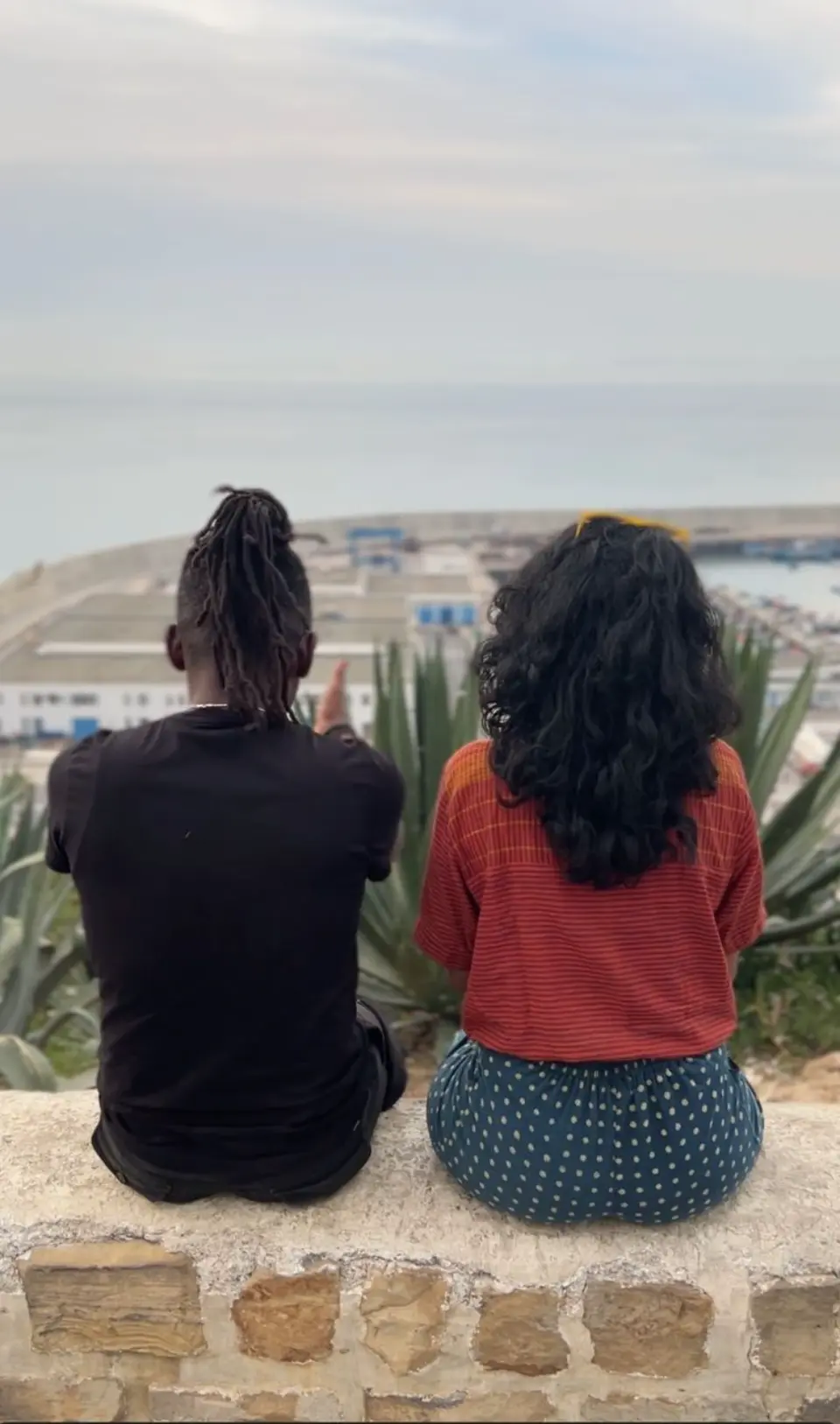
{a rhythmic agglomeration of words written, spoken and thought}
Introductions
M: I’m Mathangi Krishnamurthy; I live in Chennai, I speak English, Tamil, Hindi and Marathi and I am well-versed in the arts of gesticulation and the popular Hindi film song. In a pinch, I can attempt a French accent. I am trained in anthropology, and I teach feminist theory, postcolonial writing, and cultural anthropology for a living.
E: And I am Emeka Okereke, a visual artist and a border-being. In terms of the inclination to “tell stories”, I like to think of myself as an image-maker. I am Trans-disciplinary in my disposition and ways of moving in the world. This is very much rooted in the idea of Trans-Africanism which projects the Black, African reality of our time as “a story of journeys”. I create artistic works. I teach art. I write. I convene people, and conjure spaces for the performance of togetherness – all of which feels like the cadence of breathing.
Arrival and Encounter
Arrival seems so far away. From the point of us meeting at Madrid airport to Emeka and my entering Tangier and being swooped away by Mustapha’s vintage Mercedes, a lot of it seems from a lifetime ago and yet, also nearer than even my every day.
I was thrown head-first into the residency, for example, by virtue of an almost caricatural anthropological event, that of the airline having misplaced all my luggage. Thanks to my newly acquired SIM card, a dogged determination to spell my name and complaint number to every worker answering the phone on the Iberia hotline, and the discovery of a masculine djellaba as an extremely convenient and chic costume to wait out the impending arrival of my wardrobe, I found myself suitably acclimatized in a fairly short period of time. Thus began the residency.
In the next three weeks I was part researcher, part tourist, part ingénue. I arrived intrepid and trepidatious, knowing not the nature of what I was embarking upon and yet willing to set aside any identity I may possess in approaching it. For a residency predicated upon the meeting point between an artist and a researcher, this may seem foolhardy. But my stance was not entirely without thought. All my life, I have been an anthropologist of India, and specifically those parts of India to which I had access through both life experience and language. In other words, I was that category they call a native ethnographer, one which I inhabit with an acute sense of critique as well as responsibility. The native-ness in this naming is neither a given concept nor a static one. Over 20 odd years of conducting ethnographic research in many parts of the country, I am ever energized by how much more there is to do. I claim very little expertise; if anything, I attempt rigour.
Arriving in Morocco, North Africa, having scant familiarity with French and none whatsoever with Darija, the spoken dialect of Arabic here, I had two options. I could attempt furious preparation and see where that got me. Which I did. I dug out my rusty French texts from a pandemic-era Alliance Française course and attempted to find Darija on Duolingo. Neither got me very far. Option two was to do what I often do in relation to things I have signed up for with a clear sense of knowing that it will lead me into uncharted territory. Which is to take one step at a time. I read what I could, I gathered literature, I informed myself and gained a broad sense of contemporary Morocco, and off I went.
In this sense, the closest analogy I can think of in relation to arrival is what one calls an exploration. Along with it come the discursive implications of what the word conjures: curiosity, openness, flexibility but also the accompanying perils of insouciance, selective learning, and easy comparison. I state these, not as clearly outlined thoughts through which I arrived, but as a way of explicating my own bodily orientation that sought to amplify the former and be aware of the latter. I arrived not knowing what I was arriving at. I arrived entirely porous. I arrived tentatively, also a little worried about how little I was equipped to apprehend the scene as it were, but willing to orient myself differently to the question of apprehension.
How does this then affect what I began with? Which is, what is the position of a researcher here? Perhaps it is to encounter the very notion of knowledge differently.
As I discovered over the course of a series of workshops, my roles became delineated very differently than what I might have imagined. I may have been a researcher, but my work and position became very much of a listener, sans the rush to make meaning; a channel abetting the movement of people’s knowledges, and a reader of city, text and body in ways that I have just about begun to gather.
In this was also an arrival to self as one that is mindful of the moment of inhabitation, its various strands, and its location at the cusp of past and future. As esoteric as that sounds, this “arrival” to self is also a moment of being present to the other. Through such inhabitation, my arrival consisted of deep bodily knowledge of both the incommensurability of experience to singular categories, as much as the deeply affective ways in which we apprehend each other, albeit even for just a moment.
Such an arrival is also predicated upon a seemingly singular, seemingly original encounter, as if once such encounter occurs, the path towards assimilation, regularity and familiarity is but a matter of time. But no, not really.
What encounters can I remember? For one, the encounter with Tangier as a city space that was nevertheless only available in very limited quantities. Emeka can speak more to this, but for the most part, what I walked in those three weeks was a very limited area, composed mainly of the areas designed for touristic consumption. The very brief of having to understand a migrant
experience from the point of view of a tourist space meant having to suss out quietude, fugitive spaces, silent alleys, and spaces of refuge.
Oh, and lest we forget. Speaking of space, you can see Spain from here.
In fact, everyone by the ramparts of the Kasbah wants to point it out to you. What they point at for the first few days has been a hazy outline of mountains; in other words, the promise of Spain. On my computer also show up, every day, twice a day, advertisements for pleasure cruises to and from Tarifa. I mean, yes, technically, if I have a Schengen visa, not only can I see Spain from here, but I can also go to Spain from here. I can come here from Spain. The verdict is out. The advertisements are on point and I’m an appropriate quarry. Another subject for another pleasure cruise.
And indeed, like Emeka says, the name for Tangier itself is the port of pleasure. An Orientalist fantasy abutting the Occident.
Over the first few days, various contexts for the seeing of Spain have come up in relation to history, geography, desire, and politics. In the idea of the Maghreb, it is obvious that you can see Spain from here. How else would one be able to imagine parts of the empire? In the geopolitical imagination, it is this capacity to see it in plain sight that makes apparent the workings of Europe. Or rather the policing of margins as thin as these, expose the hollowness of claims for exclusivity. In desirous terms, a mirroring of this imagined Europe, or even an imagined West can be seen in the urban architecture of the city—art deco, large balconies, shiny malls. And yet, knowing as one does the history of French colonialism, its aftermath, and the designation of Tangier as an international zone, one also wonders if the seeing of Spain is merely a symbolic reminder of Europe as always/ already in Tangier. The question then becomes as to what it morphs into in the current imagination and the reference points that still hold resonance. Lastly, yes, it’s possible to see Spain from here, but it’s also equally and perhaps, even more possible to see the snaking curling edge of Tangier from here close to the medina and the Kasbah. And this curling tail, with its many hilly contours apparently houses the rich and the famous of Tangier. On the opposite side, away from the edge of Spain as we head west of Tangier lies the Parc Perdicaris, available for leisure tours and entertainment, courtesy the generosity of Ion Perdicaris, former consul to the US, and a Greek-American devoted to the cause of providing for his tubercular wife an expansive space to recover.
Taken over by the state in 1958, the Parc’s point of view of Spain is something I’m curious about.
The edge of Spain. Is it a mirage or a floating signifier? In a literal sense. A container for sense making, as is always the case with an overdetermined object. Heavy with meaning, it empties itself out, retaining only the name and at the core, a material object. Available for modular adjustment at will. A postmodern political. More on that later. Or not.
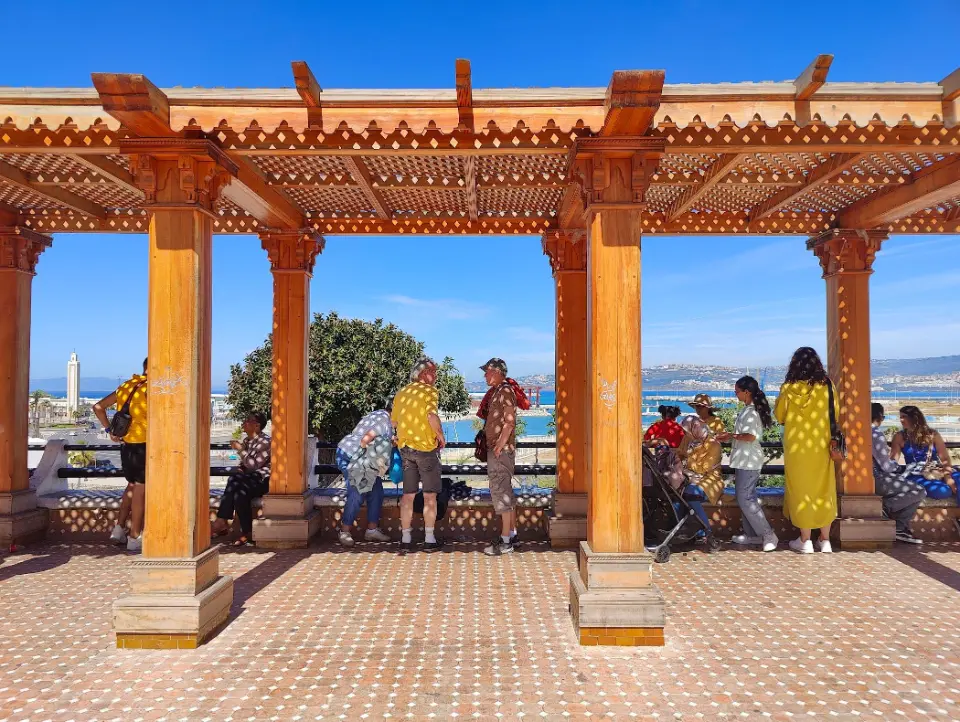
{what it morphs into in the current imagination}
E
My first morning run in the city took me along the corniche. From the starting point near our lodge, it stretched approximately 5 kilometres before it got too sloppy to sustain. The waterfront of Tangier is a monumental project made out of a massive expanse of concrete slabs that form a large promenade area for tourists and inhabitants of the city. As I ran the length of it towards the area lining the Atlantic Ocean, I noted how monolithic the waterfront’s infrastructure is. It’s a recurrent proliferation of hotels and neatly groomed trees like an edifice dedicated to worshiping a fixed image of the shoreline.
There is a concerted effort, almost to the point of overkill, to sustain a dreamy, hypnotizing view of the shore. This becomes apparent in the evenings as the rainbow fountains come on about which a sea of people walk.
The city’s most alluring attraction is the Mediterranean view from an elevation at the Kasbah. Tourists – a cocktail of diasporic Moroccans, Europeans, and everyone else in small portions – line up at the rails of the height starring at the captivating sight formed by the intersecting blues of the sea, and the skies themed by well-trimmed green lawns, trees, luxury boats, and leisure spots.
One of the most recurring remarks about the geography of Tangier is that « You can see Spain from here. » This seems more valid as a narrative and a PR slogan than an actual fact. The much one can see of Spain from the Kasbah is a foggy, mirage-like mountainous outline delineating the horizon. Yet everything about the shore, and to a large extent, the city of Tangier is designed to uphold this reference to Spain.
Historically, Tangier has always been a city at crossroads. It had done well to uphold this reputation over the centuries until recent years when it took on a different narrative as the point from which migrants risk their lives to cross into Europe. Since the current King of Morocco ascended the throne in the late 90s, he has dedicated considerable attention to the development of Tangier into an ultra-modern city hinged on the narrative of its proximity to Europe. The monolithic infrastructures lining the shore are a testament to that. They are designed to sustain a static image and view oriented towards Europe so much that it wouldn’t be far-fetched to think of Tangier as a watch-tower city strategically designed to demagnetize and, perhaps in the future, divest Europe of its power of hegemony/exclusivity through which its outermost frontiers are legitimized and often weaponized. The idea that one can see Spain from Tangier offers Morocco a historical reference and a cultural claim to their insistence on shaping the geopolitical narrative of that part of the Africa-Europe border conflation. The object of contention here is the same as that central to the making of the post-modern era. The battle of the 21st century is one of logic, and those who shape the image control the gaze and, by extension, meaning.
To many, Tangier is an outpost that might seem like a reflection or even an attempt at replicating a Western idea of a Metropolis. This view has some truth, yet this is, at best, a tangential reading. I would instead argue that the reflection is an act of mirroring something back unto itself as a way of creating a zone of multiplex signals which divests the border intersection of its effective charge. What makes Tangier a real place is not its facade,
waterfronts, or tourists but its indigenous people and its history. Everything else is designed to deflect the eyes-blinding refractions of the West (Spain, Europe).
From this analysis, it is easy to imagine how anyone not directly instrumental in manufacturing the waterfront facades is caught up in the frantic movements of these refractions and mirroring. The Moroccan (Harraga)1 and West African migrants are the foremost examples. They are not « flash agents » (as Edouard Glissant2 designates proponents of neoliberal tendencies) but rather those caught in the fog of an illusory landscape. Their hope and dreams, shored up by a deeply cultivated resilience, become victims of deliberately constructed decoys in the form of a view, complete with enchanting features from shore to horizon.
Thus, it is no surprise that a few years ago, the port from which they attempted to « cross » to Europe was moved 45 kilometers outside the city of Tangier to make way for what is now called « Porte du Plaisir. » As the narrative of the town is ossified into a neoliberal space of Mediterranean paradise, a favorite destination for the best Moroccan Tagine, migrants whose sole focus is to « cross » to Europe – the essence of everything paradisiacal – may find their lives all the more inversely proportional to the weight of their dreams – a formula for purposelessness.
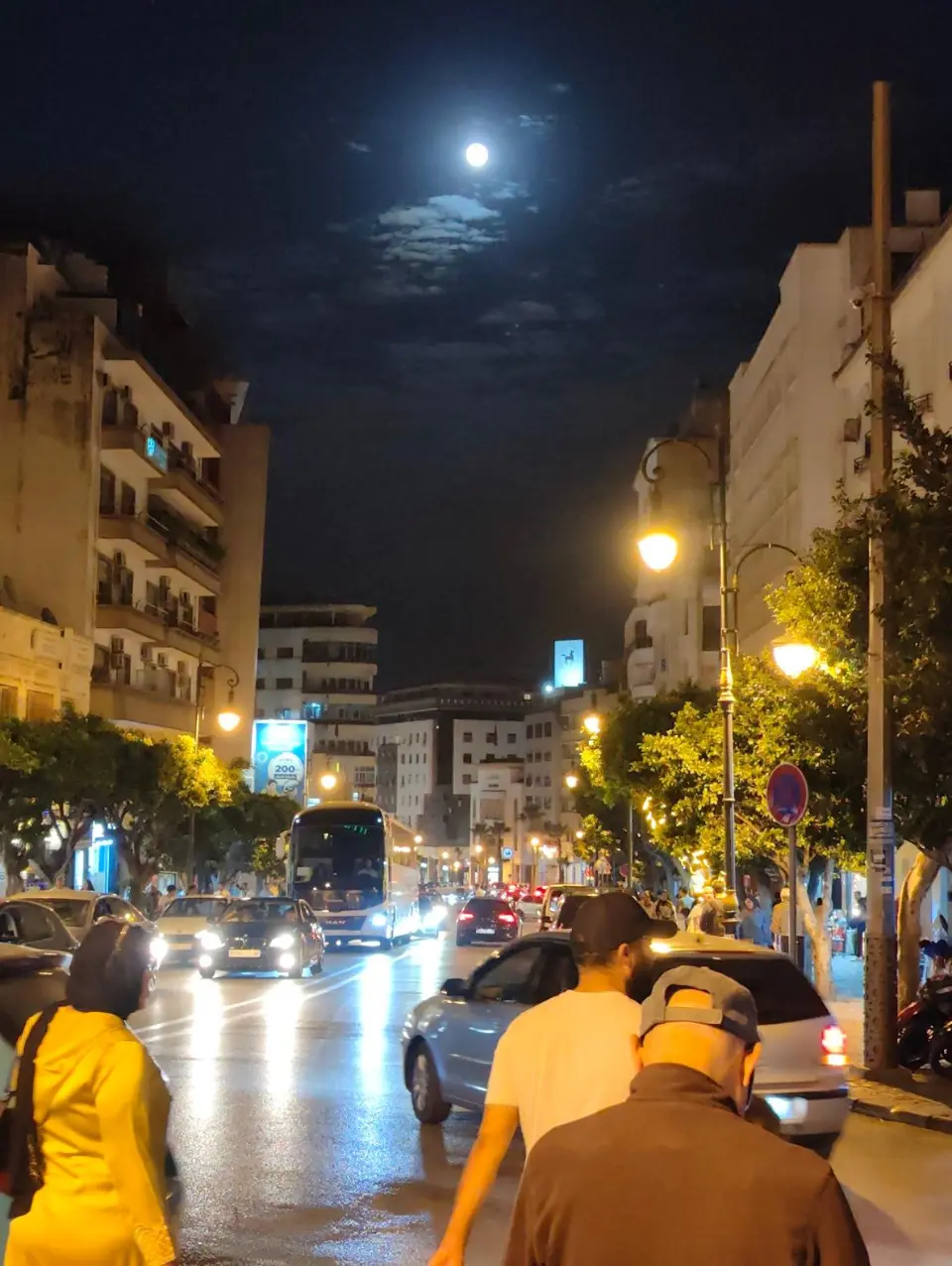
{in the fog of an illusory landscape}
Our time in Tangier
M
The difficulty is in locating a place to start. For in trying to articulate all of it, I remember first of all, that I went through the residency as a wholly porous body, endlessly absorbent, and buffeted by all manner of emotion in a locale so unfamiliar, yet so reminiscent of so many other lives and relations that I have lived and continue to live. That the process of collaboration was a wholly embodied one, where we spent three weeks in constant conversation and in which conversation became a mode of work. I experienced the rush of words as a maze, a labyrinth and a clearing engaging everyday with questions such as ‘Where am I?’, ‘What is the work of the day?’, ‘How does my body feel?’, ‘What does it mean to collaborate?’
I remember talking about everything. Some days it was too much, other days, just right.
How does conversation constitute a method? The idea of our collective, ‘Ala-Ila’ began with conversation. From our first meeting, we noticed our capacity to engage with ease in an ongoing dance of thoughts, observations, concepts, and differences. Over time and distance, we moved intentionally into sustaining this conversational capacity and disposition; we recorded podcasts, wrote articles, and exchanged writing.
In Tangier, the dance continued.
Our conversations are both a practice and a method. Through this constant back-and-forth of thoughtful speech and deep listening, we see how all our various experiences, whether in workshops or just by walking through the city, are then gathered via these conversations into pathways for embodied action.
Conversations are not just an exchange of words, they are also embodied modes of orientation towards multiple “others”, friends, and strangers alike. A conversation on my first day in Tangier with an elderly gentleman selling djellabas in the square turned out to be mutual ruminations on the handsomeness of the Indian film star, Shammi Kapoor. Another with the proprietor of a rug store evoked in my mind the intimacy of the rituals of a bargain, and perhaps, even the performance of something that is expected to happen in the kind of touristy haven that is Tangier. What both brought to mind is of Tangier at crossroads of travellers for a very long time.
And yet, the travellers we were privileged to be interlocutors for—West African migrants—do not feature very often in this imagination. So perhaps, the most notable hours I spent in Tangier were in their company as Emeka and I participated in multiple modes of translation. Between languages, lives, subjectivities, continents, invisibilities, and multiplicities.
At the back of our minds, we kept thinking as to what manner of artistic production could make manifest in more visceral ways, figures such as “the migrant” and phenomena such as “migration” in this complex site, evoking in turn the Maghreb, Africa, writers and poets of the beat generation, and a constitutional monarchy with its own sensational history? We collected sounds, images, words, and impressions, wrote little essays from writing prompts, gathered keywords, and recorded performative conversations in key public spaces. We set aside any anxieties of completeness or holism, choosing instead to render through collage our inchoate feelings, our moving bodies, and our day-to-day correspondences and encounters.
It is obvious to me, that I am moving across a threshold and seeing over and over again the presence of a powerful ethnographic imagination in a community of writers, thinkers, artists with similar concerns to mine. It is obvious to me that I am on a search, absorbing clumsily albeit a host of other skills necessary to “describe” people in a way that doesn’t reduce them to terms that I am familiar with. I return again and again to the difficult line between the universal and the particular. Or as I read on a t-shirt somewhere, “same same but different”. The risks of such a fragmented, partial knowing are obvious to me even as I think that the risks of not opening out or relocating ethnographic and anthropological practice are even worse. I know that everything cannot be ethnographic. Yet, in disavowing the ethnographic and sinking deeper into the certainty, that none besides ourselves, if that, are knowable, we are courting opacity as ethic.
The act of translation is also the act of taking time. Of noticing people’s gestures, bodies, movements, affects. And opacities. Emeka talks about this, quoting Édouard Glissant’s “right to opacity”.
E
Indeed. In Tangier, there are stratified layers of opacities – a phenomenon that Mathangi has described as « hiding in plain sight. » They are stacked unto each other to form layers that covertly and unobtrusively separate the indigenes from the foreigners. If you were visiting for a few weeks and staying at the city’s cosmopolitan centre, you could easily be fooled by the layers of decoys if taken at face value. Notwithstanding, I would argue that such « outlook » is a function of the refraction resulting from the multiplex signals caused by Tangier mirroring the West back unto itself while taking pains to draw a line between what is real (an identity culturally and constitutionally legitimized by the monarchy of one of the longest reigning dynasties of the Arab world) and what is a mirage.
Tourism is at the heart of the making of the mirage. Thus, naming the luxury hotel near the Cave of Hercules « Le Mirage » is not so much a Freudian slip as an analogy. The shores of Tangier draw many tourists – Europeans, Moroccans, and everyone else – to its mesmerising allure. It is where the blue sky meets the blue sea and the blue ocean. Besides the golden hours of the sun, it is mostly blue all day long. Tangier’s architecture, mountainous rocks, and concrete structures provide the needful solidity and elevation upon which people stand and gaze all day. The horizon presented by the shore is a fixed one. It helps to sell the image to tourists as something whose quality is unalterable. And because this image – unlike those in a museum – is overwhelming in scale, people are left with few options but to consume as much as their money’s worth with their eyes, almost gluttonously. And because they proliferate the fixed image by superimposing and photographing themselves unto it, they also become complicit in the multiplex signals and the ensuing refractions.
Two weeks into our time in Tangier, we had myriad encounters and met many who were « caught » in the interstices of the multiplex signals produced at the conflation of two border points. Elsewhere, I have elaborated on how Tangier is a mirroring back of Europe unto itself, a strategy of deflection but also of refraction whose effect, in the long run, demagnetizes the European border of its incontestable legitimacy. The geopolitical conflation of Morocco and Spain, coupled with their shared history, makes this border point a unique site for observing and tracking the theatrics of 21st-century kino-politics between two disparate continents whose relationship with each other is one of deep-seated apprehension. The waters that separate the two continents – the Mediterranean Sea and the Atlantic Ocean – are the main sites of volatility. Their positioning and roles are duplicitous in that they are passageways as much as dead ends.
The fixed image of the shore teasing the idea of a paradisiacal Europe behind it, in a loop, draws migrants and sojourners to Tangier. Over drinks at a bar called Number One, Kingsley tells us that the migrants who arrive in Tangier are usually tired of wandering and are now on the brink of hopelessness. Their only foreseeable option is to « cross » the sea into Europe. He says, « Jesus [God] exists only on the Mediterranean Sea; before that, there is no God. » In other words, the moving body whose ability to rekindle hope is almost fizzled out saves his last breath for the inevitable crossing. At this point, he has suffered so much precariousness that he is willing to overestimate his chances at the expense of his life.
« I would rather die in the sea than return to my country empty-handed
to start all over again. »
Tangier, for many migrants and sojourners, is a space of limbo. Conflating this with a liminal or transitory space is erroneous, as could easily be the case. Systemic racism towards West
Africans and dejected Moroccans (the Harraga, for instance) makes it such that the city presents a duplicitous face to the « unwanted » of the society. Moreover, Tangier has specific and often uncanny methods of controlling the flow of movement between migrants, tourists, experts, and locals. A migrant without legal documents could be deported, not to another country, but to Casablanca, a city further away from the coast closest to Europe. Thus, it is not an immigration policy based on the sovereignty of a nation but one that mediates proximity to whiteness. Indeed, some of these policies are funded by European organizations and the European Union.
When the migrant arrives in Tangier, he sees no life for him there. Movement ceases. The state of limbo is a state of parenthesis – a pause without the added benefit of respite. Everything that has movement is a story. The migrant ceases to be a story and enters a bracketed space quite unlike anything because every volition, act, or semblance of meaningfulness is geared towards crossing the Mediterranean Sea.
Where there is no movement, there is no faith (no God) and no story insofar as one’s agency and subjectivity are concerned.
One’s faith is deferred only to be reprised at the first step into the sea. It is Be-ing as an antithesis to motion.
« It does not matter what it is; as long as it can float, they would rather jump on it. »
This condition makes it difficult for those with different realities to penetrate the psyche of the migrant. To the migrant, the fixed image of the shore is not a mirage. It is a portal towards a rebirth, a re-creation of self for which the alternative is a living death. It is also a forward movement for which the migrant has lost all aptitude for turning back. For those with the legal means to travel freely between Europe and elsewhere (like Mathangi and me), the concept of a mirage is a foregone conclusion. It is also an indelible bias, yet credible given its position within the multiplex signals. Although the migrant is the archetypal figure caught in the swirling interstices of the multiplex signals produced by Tangier’s proximity to whiteness, their lives, and context-specific experiences exemplify the refractions generated by these signals. There is no one migrant narrative. All the actors, interlocutors, observers, witnesses, policymakers, and researchers are complicit in producing the multiplex signals for which their activities are refractions.
Consequently, I am inclined to reflect on my position as a strand of refraction within the multiplex. Whatever agency we may claim as participatory observers is confined to the limits of our purview. The only way to navigate this conundrum is to follow the prompts of my visceral experiences while in the city. The body is a navigation system. In its perpetual process of presence-ing, it collates and arranges knowledge in ways that accord the word « personal » a particular emphasis. I have attuned myself to this approach to reading and gleaning information from disparate sources considering that the nature of the multiplex space is bound to generate flares of duplicity as a fallout of its refractive activities, a pitfall I must be cognizant and mindful of.
As an Afropolitan – a purely 21st-century designation for black and brown bodies that inhabit, in no given order, the plural realities of the « here and elsewhere » – I am aware of how the convenient abhorrence of absolutism and essentialism could leave pockets of porosities and « blind spots » that become possible breeding sites for flares of duplicity.
What do I mean by flares of duplicity? They are the double meanings that emerge when the mirage falters between what is real and what is a semblance of it. They are ephemeral and flimsy if not wilfully deployed as relativist decoys to undermine commitment to constructive delineation. As the world becomes increasingly multi-contextual, correlations between things will become equally multi-dimensional. Through mimesis and other comparative tendencies, there will be mirroring, deflections, and refractions producing flares of duplicity at their crevices. On the other hand, we will be obliged to inhabit and navigate these crevices charged with flares of duplicity, the next frontier of power play that opens up within the negotiations and collisions of our subjectivities and agencies.
Frantz Fanon’s reference to the double bind could be considered a premonition. By that, he drew a line from his present to ours, cutting across postcolonial theories, poststructuralism and all the way to the intersectional discourse of today. Thus, he is the psychoanalyst per excellence of the sociocultural implications of Difference3. Yet, being essentially a healer, his work offers a springboard for re-creating the concept of the human being – what he often designated as « new humanity ». Erroneously understood as a philosopher who solicited violence, his work points to the resolution of human Differences divested of their borders of violence. There is a place where the collective is a sublimation of the subjective. It is a place of encounter. It lies at the depth – at the ocean floor of human intimacy and story. But to get there, we must wade through layers of Difference(s). This process is cathartic and will unravel whoever makes an honest attempt to « weather the storm ». It will require urge and intentionality. It will take time if not a lifetime. The risk is an « estrangement from one’s enshrined self », as Toni Morrison4 puts it. Yet any other route will only reproduce double standards, hypocrisy and white fragility, all constituting the flares of duplicity. We must now stay benignly vigilant and watch for those who, as part of short sighted gratification, would wilfully take the path of least resistance to their privilege.
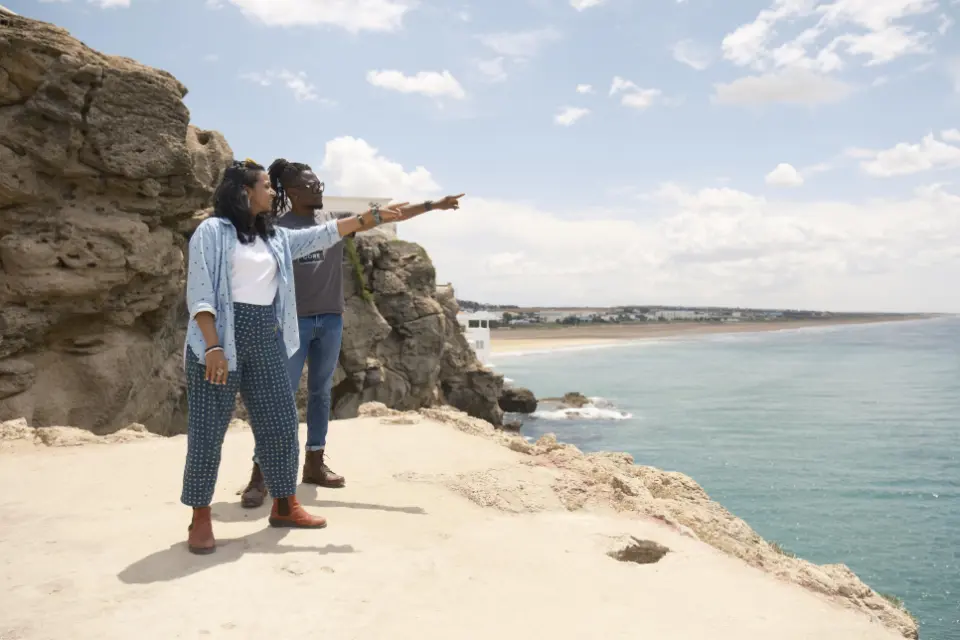
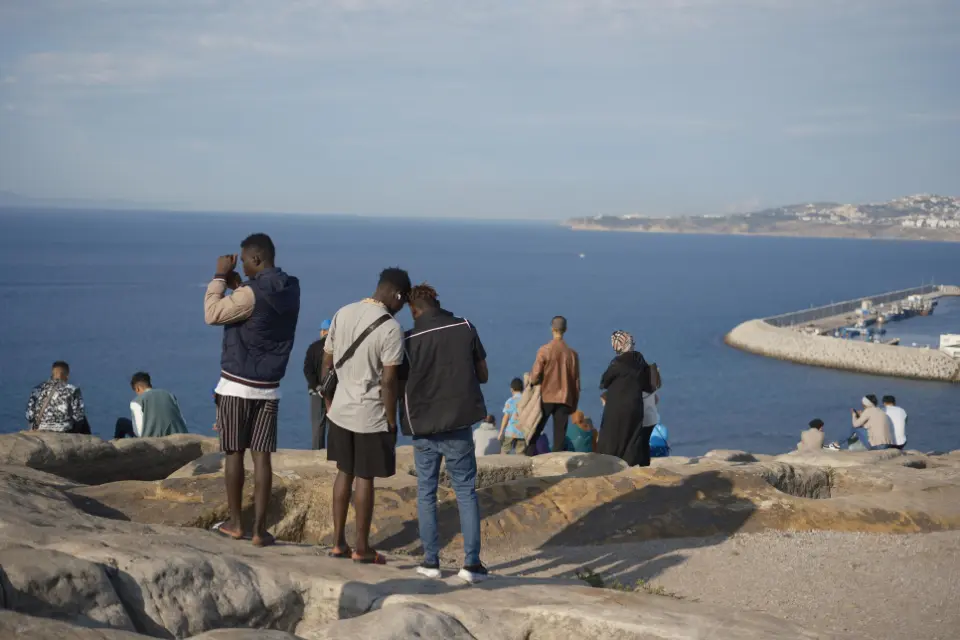
{ephemeral and flimsy, the double bind could be considered a premonition}
On being in a workshop
E
I have stared at this blank page for a long time, waiting for the words to gather. Certain lived experiences pass through the body in ways that scatter words into a million fragments. They leave you naked and exposed to the tides of human stories.
For the past three days, Mathangi and I have facilitated workshop sessions with selected citizens, sojourners, and locals of Tangier. These people have traversed myriad borders and got tangled in the violence(s) that characterise points of « crossings. » Since humans became sedentary, movement has become an act of overt defiance against losing oneself to stagnancy. Unfortunately, those who take to the road often pay the price for their inkling towards freedom. In modern times, movements have been co-opted by explorers, Imperialists, and multinational capitalists, out of which the idea of the border was invented. Borders are markers of exclusivity and exclusion. They are stark (often tacky) delineations of territory whose outlines are weaponised. They are also an apparatus for the extraction of labour when they are not means for the expulsion of devaluated lives. Those who dare to cross are forced back into their bodies. Yet, no one is sedentary in the real sense. Either you brave the travails of your journey or accept the enervating lure of inertia.
I identify with the workshop participants in aspects that mark them as sojourners. Those who would instead leave the past behind or take with them what they can into the present. The future is often too hazy and dizzying to dwell on. One’s path on a journey is never clear. It is made up of loops of paradoxes that the sojourner must resolve if he or she will not constantly be subjected to the whims of kino-politics. The sojourner, weary of a needless carry-on, travels light but with a heart full of visceral impressions. They are strong yet brittle but never fragile.
As the participants shared what they could muster of their stories, I could sense, even to the extent of visualising, the many constricting paths they had to wade through. These stories take form out of silences and dingy recesses of lived experiences. For some, it takes the form of illegible pain; for others, it has morphed into embodied knowledge eloquently expressed as self validated philosophy.
I could sense all this because I, too, have been on this road; have lived experiences that feel like memories of a lucid nightmare whenever they sift to the fore. Yet, much of my acute sensitivity to waves transmitted through this sharing stems from the awareness that I am reconciling the convoluted, conflictual debris of my past with the sense of what Edouard Glissant calls « the always possible infinite » inherent in the present. This disposition makes it such that despite the well of pain and trepidation these sessions call up in me, it filters into a spacious fissure of gratitude.
In this context, my position is one of privilege of some sort. Yet, I am always the first to get defensive if anyone should take this assertion at face value. There are traceable junctures at which my life branched off from the worst possible scenarios. I have pinched myself more frequently than I could remember to make sure I wasn’t lying somewhere dreaming. Sometimes, I am overwhelmed by the uncanniness of my recurrent luck.
For this reason, I have held on to hope, not just as a concept but as a never-extinguishing hunger. As the Igbo saying goes, the hunger for hope never kills. But to hold on to something, almost convulsively, brings with it a fair share of weight. As a result, I walk around with a peculiar kind of heaviness. Over the years, I have learned to spread the load of this weight through a rigorous process of self-appraisal.
Today, listening to the participants of a workshop in Tangier, I remember why my paths have led me to such places and people. These sojourners – they carry their pain everywhere they go. It has conditioned them as well as their environment. One senses that the burden of pain is not the most harrowing of their predicament but rather the abject lack of a space in which what has become their most personal possession is valued and validated. No matter how demoralizing, anyone who is indelibly marked by misfortune knows too well the horror of letting go of those experiences without assurance of what replaces them. You cannot ask someone to « let go » if you have not valorised their pain. Better still, no one lets go of the past if they have not found the vocabulary to name it.
Black bodies on the move are subject to the most dehumanizing violence. Yet most of the avenues and frames available for articulating their embodied knowledge(s) are too predetermined to allow for a proper grasp of the nuances and multiplicity of personal experiences, let alone valorise them. In no other context is silence so heavy and tumorous that it threatens implosion and self-imprisonment. Here, Audre Lorde’s call for « the transformation of silence into language and action » becomes all the more timely. Yet, suppose language is a pre condition for action. In that case, the work of our time is to conjure spaces and environments that allow for the manifestation of new vocabularies for our silences.
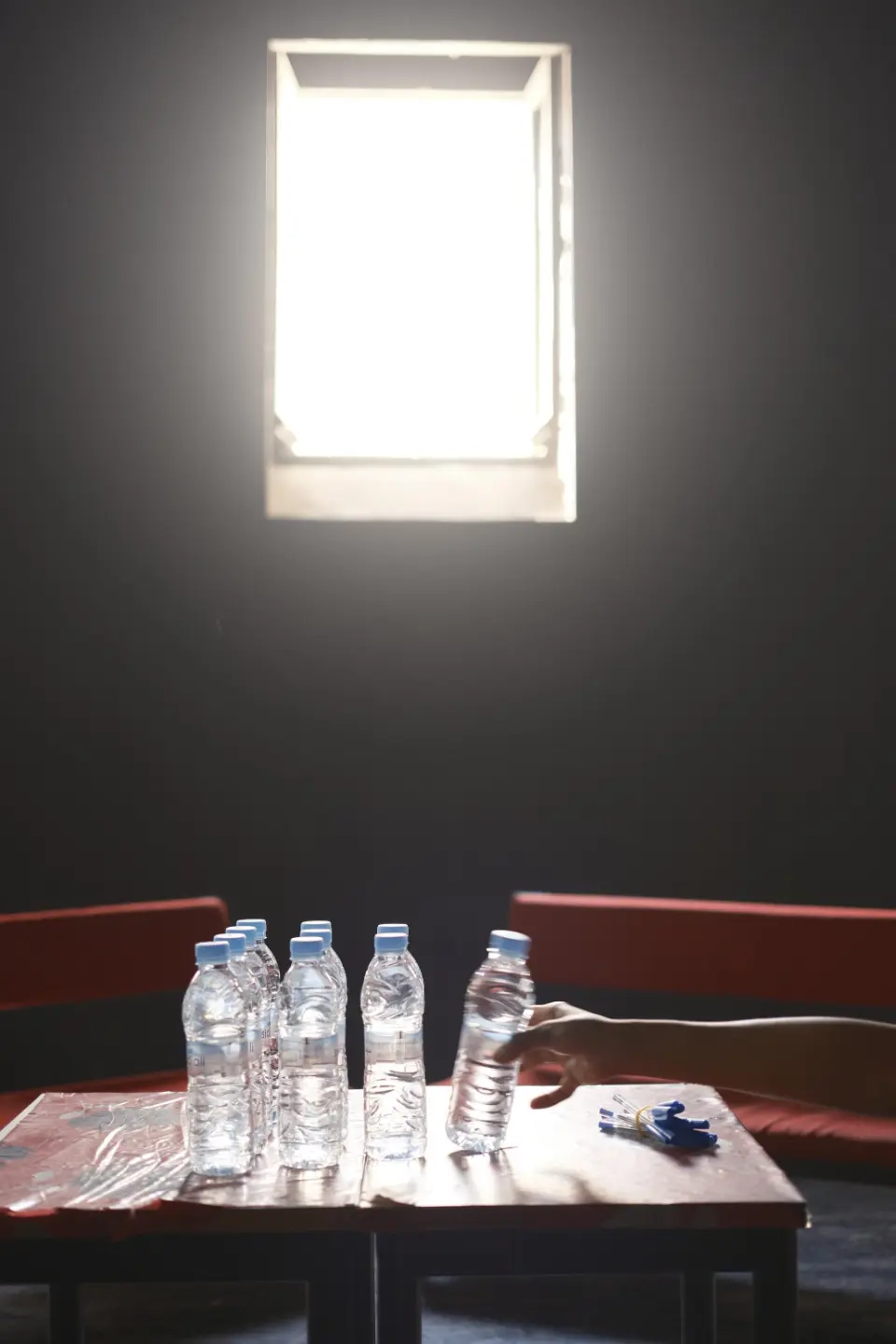
{hope, not just as a concept but as a never-extinguishing hunger}
M
Howling silently for an hour, I asked myself, “Who is this God?” I feel fire and brimstone at the bottom of my ribcage. And hot, heavy tears. “What business do you have crying?” I ask. But it is my business.
I do not have any words to report to family, friends, loved ones, what I am doing here. Not doing as in acting, but doing as in being. I guard and protect my words, for I fear they will be so inadequate, so incapable, so helpless to transmit what is transpiring here. Maelstroms. Within everyone. Just maelstroms. Awaiting the moment to break through the daily business of waking, shitting, eating, sleeping, evading death, pain, breakage and blows. I measure mine and find them to be quiet.
I can be in the workshop, I tell myself. This is necessary, transcendental work, I tell myself. I also tell myself to offer every ounce of attention I can. To listen with my body. And I don’t have to tell my body. In the moment of speaking—of Tamba, of John, of Bakary, of Fatima—I lean forward, offering proximity and honouring the words extended in generosity and faith. I can
barely hold it in when John says over and over again that he loves animals. His words feel like the laying down of something important. We are so far away, so removed from each other’s worlds in fortune, fate, hurt, and love. It is a travesty to connect my world to his. He loves his Sam, with his muzzled face; I love my Casper, who’s eaten shit this evening. We stand close to each other for a moment. I love his Sam too. And he would love Casper. Casper, who this evening I giggle at, but who arrived at our home almost three years ago in the middle of a pandemic, ejected from the only home he had ever known, being smuggled into Chennai in a pet ambulance across three states. We all huddled with him that night. He grieved for three months, barely eating, but even in that state, giving us all his love, never biting, never snarling. The only sign he showed of his state was in sitting down on the road, in the middle of a walk, refusing to move, resolutely sure that I didn’t know the way home and he wouldn’t move until he changed his mind and trusted that I’d get both of us back, safe. This is not an analogy. I am speaking, emboldened by John.
Being in the workshop feels like the building of a chamber. Or the weaving of a shroud. One. Both. We speak. The space pulses. My eyes are burning a hole in the back of my head.
Day one, I wonder how this will go. By the middle of day one, I am struggling to halt that need to know. By the end of day one, I have a stronger sense of what my struggle is, and how I am going to go through it. Slowly, the skin sloughs. The day ends with swirling, piling emotions, stories, a large mass of the material of humanity. Yemoh has been talking to us about the lives and worlds he has traversed.
Day two, we enter and move benches, chairs, cloth, bodies into a closer circle. Our bodies remember the previous day and seek the implants of yesterday’s energies. Today, the energies come at us like benedictions. Youssef declares that he is looking forward, Tamba gathers us, Maroua speaks about excitement, and slowly, a note, like a song, begins to awaken. I ask Tamba to tell me the long version of his name twice. Together we repeat some part of it, even as I lose steam four words in. It is a talismanic chant I run in my head the third time. There is laughter. And kindness towards each other, especially us.
Yesterday, we learnt all our names. Today, on an impulse, I ask if people will tell me what their names mean. The impulse seeks a way to continue to honour and uplift and witness. To see and hear and touch and feel without ossifying in typology or analysis or confession. Names are invoked again. Wisps of lives lived and felt and held close enter the circle. It does not seem anymore an accidental impulse, this question. I speak about my name and send in words from a critical Goddess.
Maybe I am only here to remember every name. Maybe I’ve been shown what it feels like to be saved by strangers. Maybe our planetary condition is to save and to be saved by strangers.
—————————-
I leave a quote from Achille Mbembe here. For no reason.
“It is simply not true that unless I have undergone the exact same experience as the other, I know nothing about his or her pain and should simply shut up. Insofar as to be human is to open oneself up to the possibility always already there of becoming (an)other, such a conception of self and identity is by definition antihuman. The political in our time must start from the imperative to reconstruct the world in common.” 5
—————-
And yet, the imperative to not co-construct seems to far outweigh its alternative. If one edge of unreason is about not meeting the other, the other finds itself petrified in the face of the other’s otherness. Especially in a post-pandemic era, having experienced a drastic shrinking into self or lack thereof, to open oneself out into the world seems to demand constant and relentless abrasion of all that one is convinced is true and necessary to the prospect of physical and emotional survival. So then what stories is one willing, capable, and open to receiving and witnessing? What story will I tell at the end of it all?
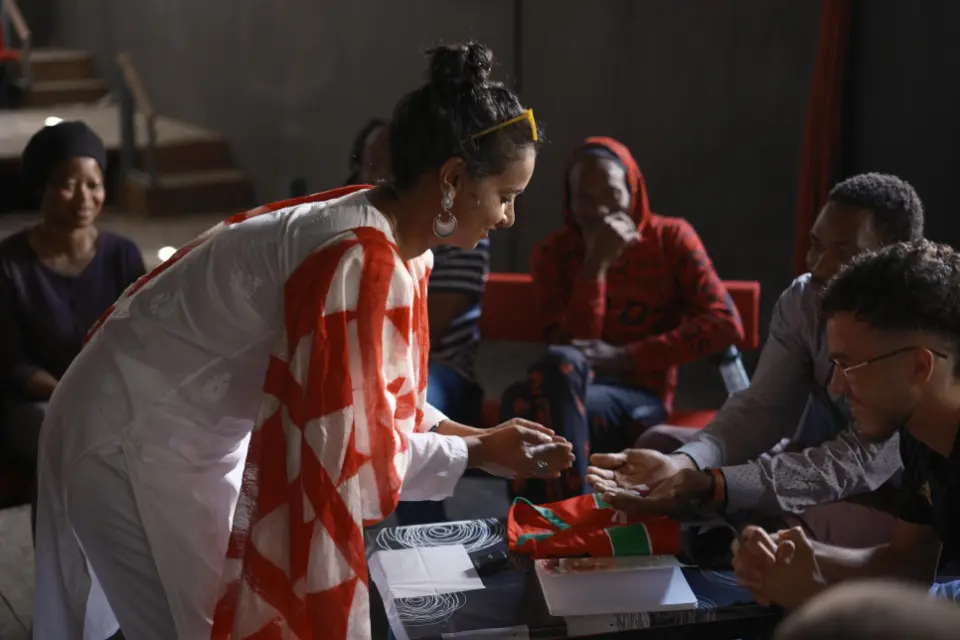
{tell me the long version of his name twice}
On the act of telling a story
M
What is a story? It is a sequence of events made whole through time and space. It is a logic, through which a series of positions and movements weaves itself into a combination of choice or destiny or fate or happenstance or coincidence or any one of the many ways in which one can apprehend life events. “I almost went there, but then…” John says. “After the catastrophe, I no longer wanted to be there,” Tamba explains. “I went searching for this talisman,” Glen says. “This is what I bought with my first salary,” I offer.
In the circle that is the workshop, stories fly between us, and we swap positions; teller, listener, translator.
Tellers tell different kinds of stories; sometimes tentatively, sometimes in preparedness.
When a workshop has been brought into being with a definite brief—everyday life, perhaps—it is also communicated to be a space that expects something. Tellers and listeners, both, respond to these expectations in different and singular ways. Sometimes they do not even speak much.
The stories told during the workshops are within the context of subjectivities and subject positions. They share one important feature. Agency. Which takes on the form different acts at different points of time in each case. With John, it is about grabbing the opportunity to work with animals when he met the founder of the animal sanctuary. He tested it out for two weeks, and decided to stay at The Sanctuary which houses and cares for rescued animals. With Fatima, it is about skipping school to go work at a salon to supplement the family income. With Bakary, it is about the joy and palpable pleasure of being able to project self into the world via voice and microphone. All these tales and recitations of self are also acts of movement in the world. One brings self into being by telling about self. These need not even be told aloud. For Marouane, who waited two days before being able to speak about self in the circle, the story already existed. His act of agency was also in deciding whether and when to bring it to us.
Each one in the circle is a listener, also deploying agency in taking in some words and staying at a distance from others. Tamba responds to Maroua’s story of leaving home with a refusal of sadness. He shares that some stories take him to the kind of depths of sorrow which he chooses to stay away from. Others respond in immediate empathetic bodily response. Still others await the translator’s ability to contain her own responses to the story being told, in order to bring it to being in another set of words, before allowing herself the luxury of complete listening. For so many of the tellings make manifest the depths of resilience through which the storyteller has been forged. Resilience also made evident in the resoluteness to tell the story.
The stories I have received and told during the course of the workshop are also a pedagogy in the ethics of listening. For there is no proper accounting for how a story arrives in the world. I experienced the workshop as a space that seeks and holds stories, in whatever form the teller chooses, in any manner of telling, in any language, in any tone, at any volume, at any pitch,
punctuated by any emotion, all of us sharing the impulse to share. I also experienced it as a channel, attuning myself to the possible arrival of a telling, leaning forward, stepping back, sitting tight, holding back, going forth.
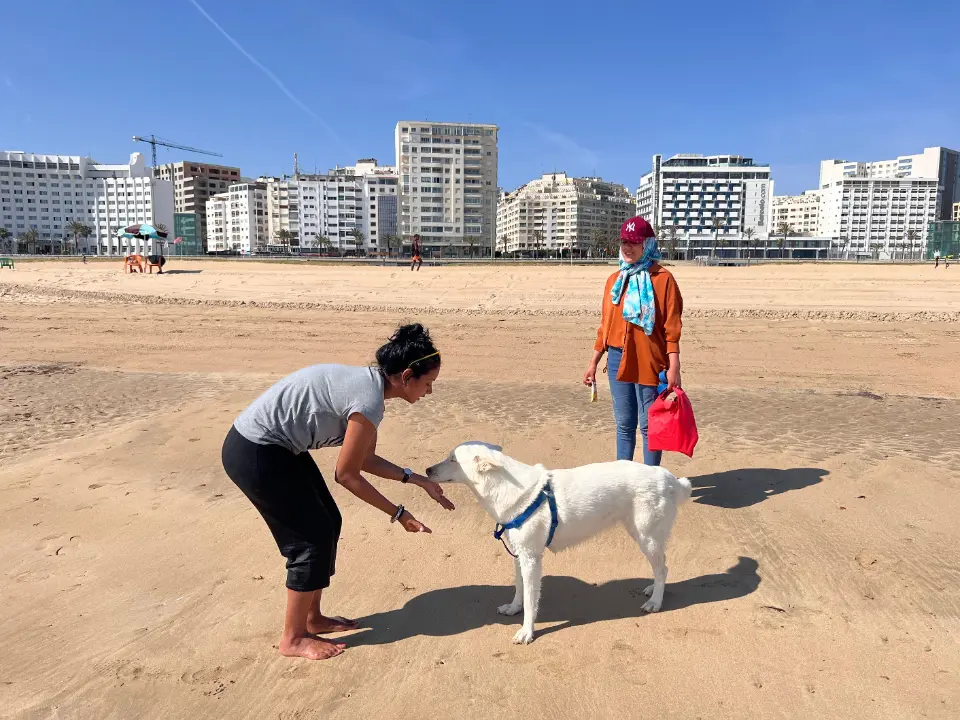
{a sequence of events made whole through time and space}
E
Not so long ago, I listened to an interview by the late Nigerian poet Christopher Okigbo6 during which he responded to a question with the assertion, « For me, poetry is not an alternative for living. » This saying now joins the plethora of timeless knowledge canonized by the practice of the poet. And I want to use it as an entry point into brewing thoughts about the poetics of storytelling.
I remember many nights when my siblings and I would gather outside my childhood home’s compound. Above, the moon shone so bright it illuminated the surroundings such that we could clearly make out each other’s faces. An aunty would narrate stories of Igbo folktales. It was one of my earliest conscious exposure to the act of storytelling. As I recall these events, I am aware that I remember the atmosphere and the blissful feelings more than the details of the stories. In hindsight, it is as if the stories were only elements for transmitting something more transcendental. Folktale storytelling is performative. The narrator’s voice is paced out, and oral narration is mediated by interludes of communal singing that instils a cyclic flow of sonic impressions through the feedback loop of the call-and-response style. Although we always almost sat on the floor, we were encouraged to rock our bodies from side to side to the sway of a song.
The act of storytelling is a bodily experience. The message (and there is always a moral to a story) is transmitted not by the words but by their sensorial infusion into, and diffusion across, the moment mediated by the circulatory nature of bodies and their senses.
Here in Tangier, I have been in a workshop with participants of varied experiences and knowledge sources. The disposition is such that one could think of everyone in the room as tributaries of rivers intersecting, diverging, and breaking out into more strands.
We are socialized to think that a story is sequential and chronological, hence the need for an earmarked terminus. However, stories can take random, meandering paths as long as it resolves into a consensus – a happily ever after. Even when the end is tragic, there is always a suggested « closing of a circle » – a karmic resolution.
« We are not telling a story. We are the story ».
When I hold the above statement to be true, the emphasis is turned toward the journey, not its destination. I allow myself to inhabit the transitory spaces between things. Fissures are not mere cracks that demarcate, fragmentize or emphasize differences between things. Neither are they a camouflage for complexity.
They are spaces of processes where things hold hands and move to the sway of songs. It takes the form of a consensus only after it has expunged all confrontational violence between the many strands that constitute it. They are sites for the (re)enactments of subjectivities insofar as a story is a conversation in continuum.
To tell a story is to listen.
To listen for the signs of fissures like the tracker puts ears to the ground to pick up vibrations of footsteps before they are seen.
To tell a story is to swing, eyes wide open, through the branches that weave themselves anew on the backs of the previous.
If everything has a force and is in movement, everything is a story. Thus, to « tell » a story is to be the channel through which encounters are made and sites of stagnancy are unknotted.
Stories are intrinsic to the act of living.
To tell a story is to follow the pulse that animates the muscles of all things to the point where they permeate, rebound and re-enter themselves.
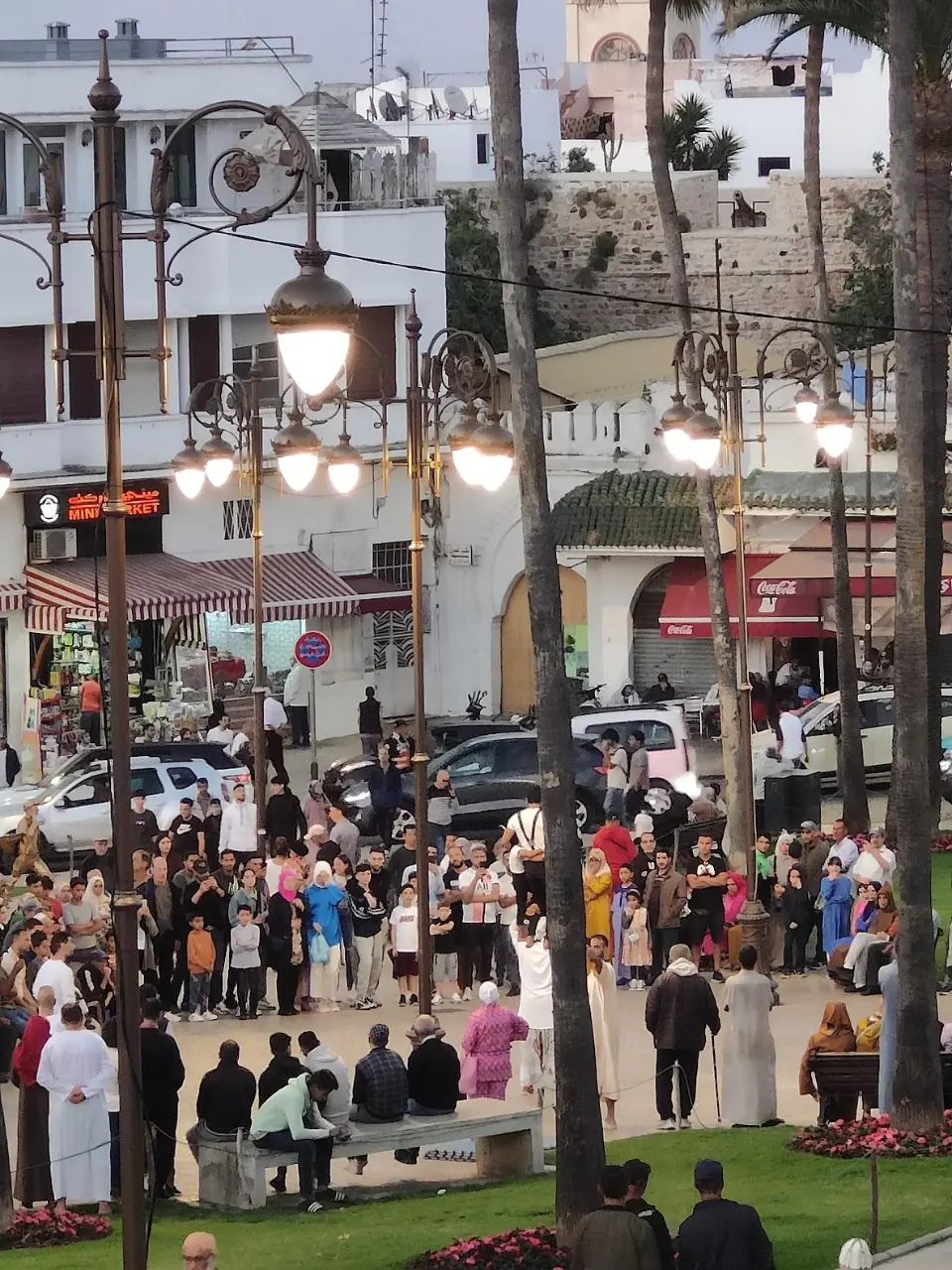
{spaces of processes where things hold hands and move to the sway of songs}
On Leaving
E
We are a few days away from the end of our time in Tangier. Yesterday, it rained profusely. This morning, the downpour continued. I decided to wander the city, hoping to read some part of the morning through my lens and under the rising sun. It turned out that the rain persisted. I photographed and filmed. While at it, I would veer off into thoughts. Yet, I found myself restraining the impulse to stay in my head rather than outside it in the open plains of the city. Why does it come easy to sift everything through the mind? This question has preoccupied me for the most part of my time. It is part of my investment in the practice of approaching knowledge through bodily experience.
One of the primary assertions about photography is that the eyes (as a physical organ) are only incidental to one’s sight (a reading of seeing). Yet, as I photographed this morning, I would reflect on the place of the eye in its rudimentary but also bodily form. As a photographer, if you have glimpsed the peculiarity of letting experiences pass through your body before it morphs into an accessible format, the inkling to trust your eyes won’t be so alien. Your eyes, in and of themselves, are organs of transmutation. They are connected to our senses much more than our willed thoughts could decipher. The depth of such a connection goes as far as the subconscious. In other words, while walking the city, it suffices for a photographer to trust only in his eyes and less in the thoughts behind the eyes. As part of one’s body, the eyes have their own movement, language, and, therefore, approach to collating and arranging knowledge/ meaning.
A wandering photographer is also a cartographer. If, in this regard, he puts himself at the service of his own eyes, he is most likely to learn a whole lot about how he moves and maps the world. There is something specific about each and every one. While the idea of uniqueness is one of the most arduously sustained myths of our time, the Personal is a singularity that expands plurality as long as it is not conflated with privacy, exclusivity, or secrecy. The photographer who allows the eyes to lead the way must first trust in his own process – his way of experiencing and distilling viscerality. A photographer will always see with his eyes what his body sees and intends to delineate if he is not « stuck » in his head. A free spirit does not mitigate the connection between the body’s senses and organs. How does one not come in the way of their body? This question is not the same as asking, « How does one let go? ». The disparity between both questions is a realm no one can elucidate for the other. Yet, it is precisely this realm that carries the consciousness of self and, by extension, how one is animated. How one moves in the world.
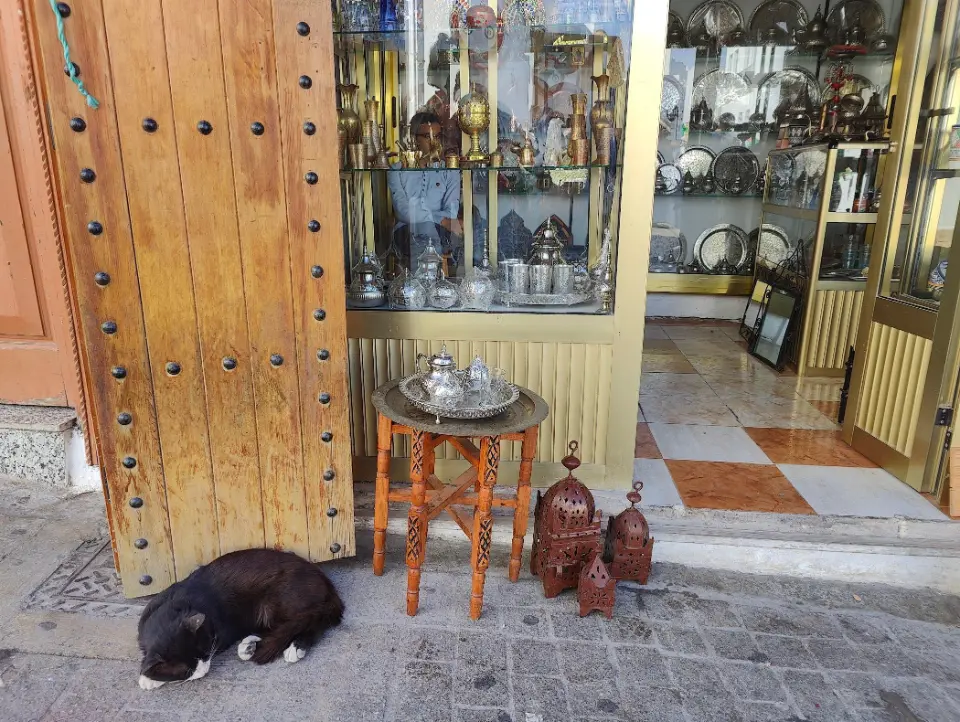
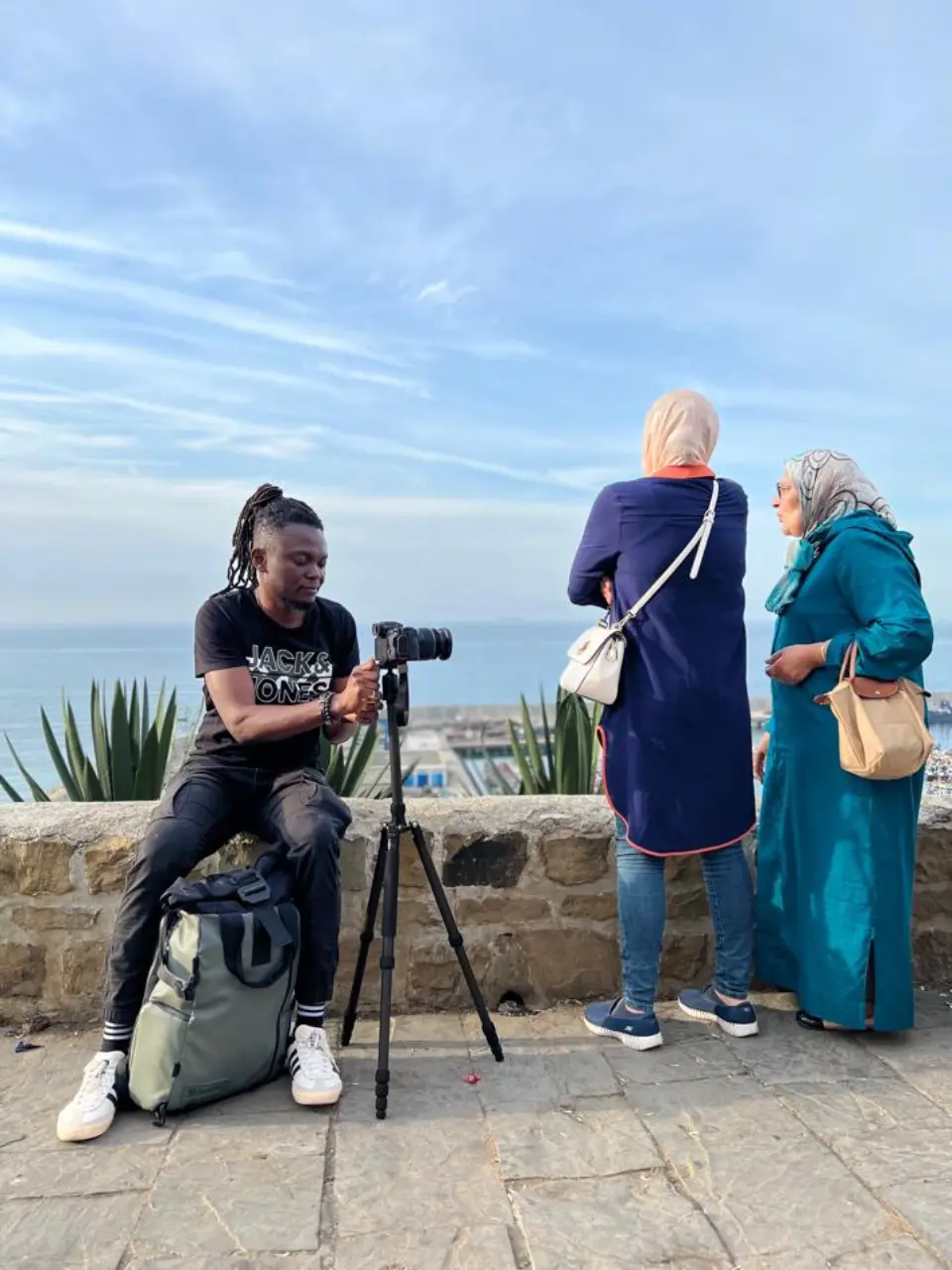
{were the accoutrements of self not so heavy}
M
By the time we are ready to leave, I am deeply deeply homesick. Not to mention physically sick. I have lost my voice and am overwhelmed with the thoughts I have not yet thought. And I’m beset by the overwhelming need for my home, my bed, my language and the sensorium of smells, sounds and sights that signals to me the certainty of home. I say, “my”, I say “home”, I say it all, acutely aware of the privileges I bear in this time and this space.
I am old. And I am homesick. Or rather, I ask myself how is it that I am homesick even as I am so old? Should I not know how to do this by now?
And it arrives almost like serendipity, a revelation. Why my father, once so intrepid and ready to venture out, now worries so much about his food wherever we travel—whether he will like it at all, whether it will suit his palate and digestion, and whether it might be wiser, to stay at home.
I am old, and I am homesick.
Emeka has been involved in the praxis of body and movement for a while, via both his body of work as well as the pioneering projects of the Invisible Borders Trans-African Photographers Organisation, an organization that he founded and continues to further with great drive and vision. So it is a credo we both have been talking about for a while, a credo that I have also always thought about as my raison d’etre. A driven and duly practised addiction to movement. “Wheels on your feet,” my mother used to say. And indeed, there were. Staring at the age of eighteen, I figured that I was only able to activate new muscles—physical, mental, and emotional—by going elsewhere. Only elsewhere were the accoutrements of self not so heavy that they prevented the access to other worlds and selves. Only by traveling, was I able to shed home. And self.
Is this what powered the Age of Discovery? Not that, to paraphrase Rushdie, anything was covered in the first place. But is this somewhat universal youthful restlessness what animated the Treaty of Tordesillas and its arrogant bifurcation of the world?
I don’t think so. For by gender as much as by postcolonial location, I cannot claim the confidence of a Portugal or a Spain of the 15th century.
But what do I make then of this refusal to sit tight with self. To only know the world as your body inhabits it. To seek and swallow whole in the hope that surely, this is not it. This, in this case, being home, limits, constraint, boundaries, horizons.
But now, I am homesick, in a life that is finding it difficult to attune itself to what it used to consider necessary, movement.
I read Olga Tokarczuk again, and marvel at her ability to write me in long-forgotten prose. In Flights7, she writes:
“That life is not for me. Clearly I did not inherit whatever gene it is that makes it so that when you linger in a place you start to put down roots. I’ve tried, a number of times, but my roots have always been shallow; the littlest breeze could always blow me right over. I don’t know how to germinate, I’m simply not in possession of that vegetable capacity. I can’t extract nutrition from the ground, I am the anti-Antaeus.”
In the last year or so, while on sabbatical, I have tentatively re-entered my life of movement, and discovered that over three years of being held down, I have willy-nilly put down roots. They sit badly on me (or is it that I sit badly on them?) but do their work nevertheless. There is a city I live in, a house I clean, people I love every day, walks I recognize, habits I soothe myself with, and a life of slight stupor that bathes me in a comfort I do not remember ever having. It’s…nice.
But this life of roots also nails me to the ground, a feeling I am only able to interpret as petrification and decay. For when movement has forever underlined vitality, surely its opposite is well, its opposite. Alas, alack, woe is me and some such.
Maybe this is the true nature of a mid-life crisis. And no, there is no confession forthcoming. “Home in the World” is the title of Amartya Sen’s memoir8; it reminds me of “Yātum ūrē yāvarum kēḷir”, the Tamil Sangam philosopher Kaniyan Poongunranar’s ode and plea to the universal spirit. Loosely translating to “The world is my town and its people my kin”, it sounds to me like lines mouthed by James Bond like heroes or Robin Hood like protagonists, as they sashay through town, forest, country and casino.
I wonder if it is more or less men’s lot to walk around the world at ease with its invitation to belong. Women at home, men in the world. And I find myself fully at home, while not quite being woman.
It does not help that homes are not necessarily great for women. Coming to feminist consciousness in the eighties and nineties in India meant a necessary flight from home and homeliness as antitheses to modernity and freedom. Many of us were told by our mothers to escape in the hopes that we would escape the relations of patriarchal power that they both felt and articulated but found themselves unable to shake off. In the process, they also set off in us a profoundly patriarchal bifurcation between home and world. I do not stay home, and therefore I am. Worthy, free, valued; pick your poison. In the ongoing project of reconciling home with received ideas about home, I am discovering that my crisis is not about choosing world over home, but of reconciling one with the other.
In some ways, my mid-life crisis then is a crisis of dwindling double vision. I’m more at home at home than ever before, while the world has become unheimlich. Three years of being shut away from it, and it has lost its sheen. Malls, cliffs, fjords, double-decker buses; in Bjork’s words, “I have seen it all”9. And all of it is in my home.
I’ve been homesick for a long time, I’ve realized. And it is only in conversation with migrants, sojourners, travellers, that it now stands re-animated for me. For to them, the idea of home, as pliable, adjustable and transient as it has become nevertheless shines bright even in its ever changing, ever-mirage-like, sometimes even phantasmal form. And in their company, I realize that it is alright to be homesick. In leaving, I take away this thought: Emeka speaks of the world, I speak of home, and perhaps, our entire project has been about witnessing and inhabiting the desire for both.
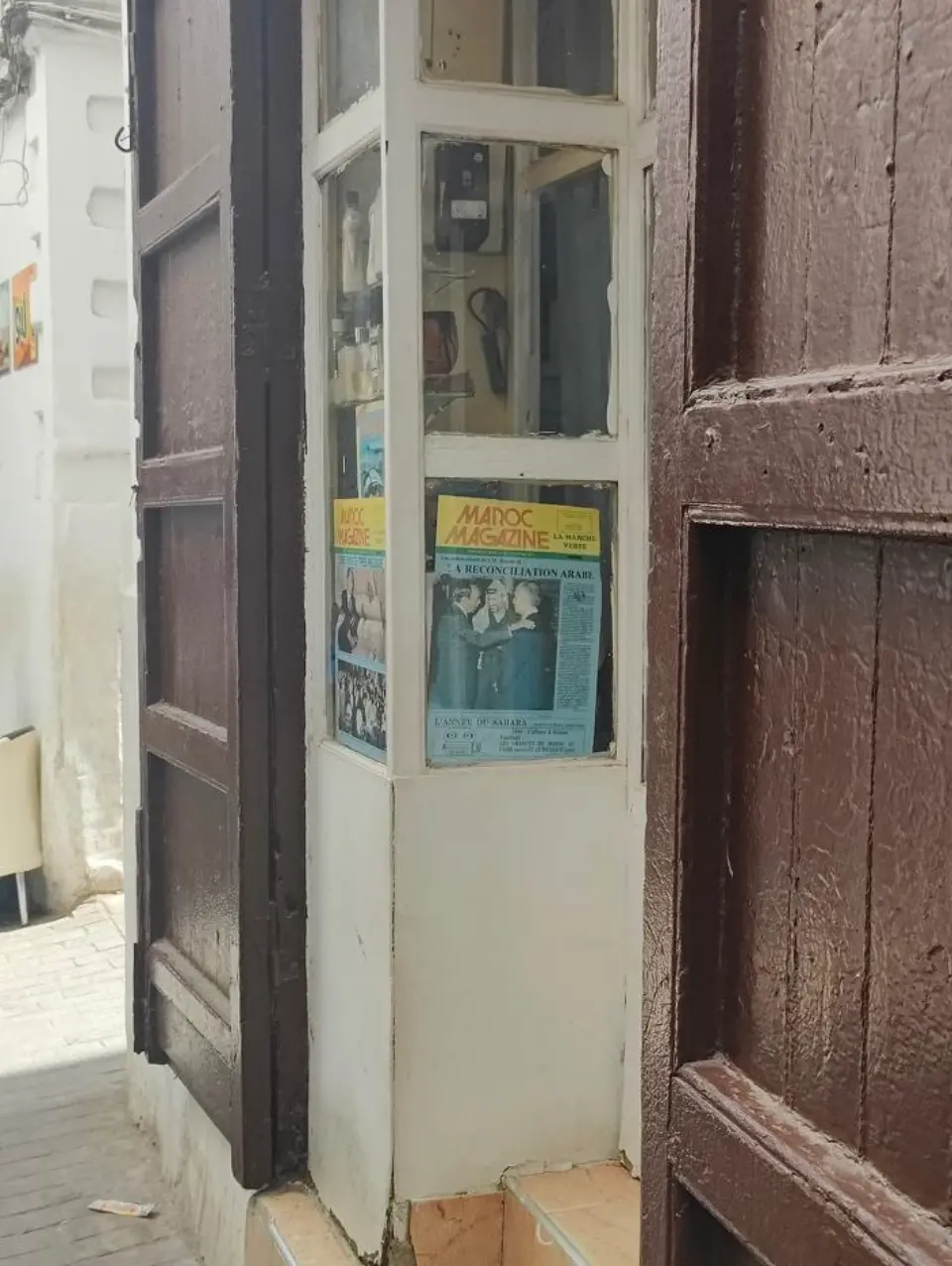
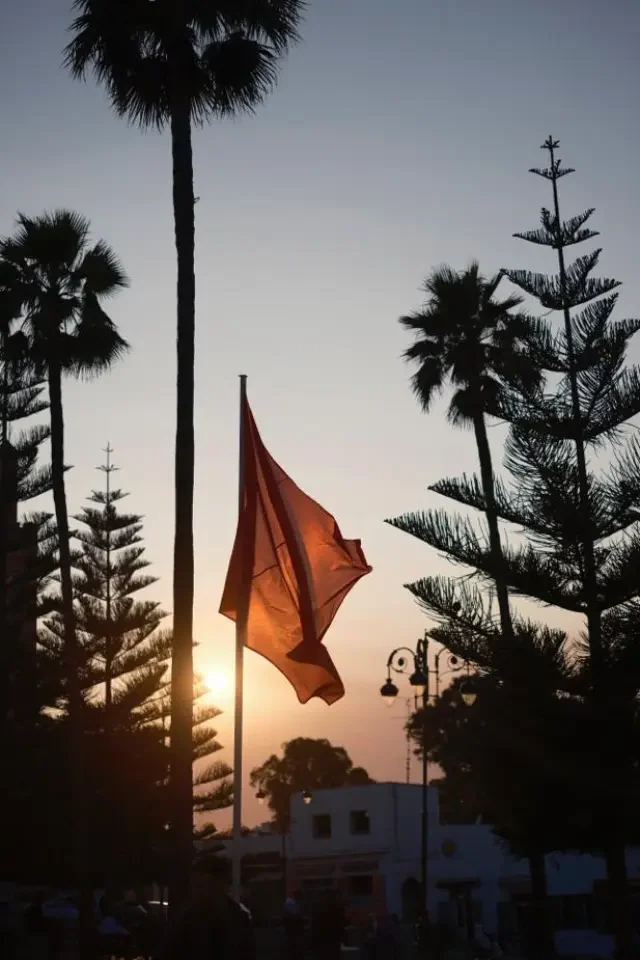
{the world has become unheimlich}
- We are grateful to Prof.Abdelmajid Hannoum, Professor of Anthropology at the University of Kansas for sharing with us his experiences and insights based on long-running ethnographic research with the harraga in Morocco. We have both also greatly benefited from reading his books and articles; please see Living Tangier: Migration, Race, and Illegality in a Moroccan City, Philadelphia: University of Pennsylvania Press, 2020.
↩︎ - See Glissant, Édouard, Poetics of Relation. Ann Arbor :University of Michigan Press, 1997. ↩︎
- See Fanon, Frantz. 2001. The Wretched of the Earth. Translated by Constance Farrington. Penguin Modern Classics. London, England: Penguin Classics; also, Frantz Fanon, 1952 [2008], Peau noire, masques blancs, Seuil. Translated as Black Skin, White Masks, Richard Philcox (trans), New York: Grove Books, 2008 ↩︎
- See Toni Morrison, The Origin of Others; Harvard University Press, Cambridge, Massachusetts, 2017 ↩︎
- Thoughts on the Planetary; An Interview with Achille Mbembe conducted by Torbjørn Tumyr Nilsen on 30th November 2018; Link on nettime.corgl ↩︎
- See Neogy, Rajat, and Paul Theroux. « Death of Christopher Okigbo. » Transition, no. 75/76 (1997): 220. Link here. ↩︎
- See Tokarczuk, Olga. 2018. Flights. Translated by Jennifer Croft. London, England: Fitzcarraldo Editions. ↩︎
- Amartya Sen (2021). Home in the World: A Memoir; Allen Lane; UK ↩︎
- See Whashington Post’s article
↩︎